


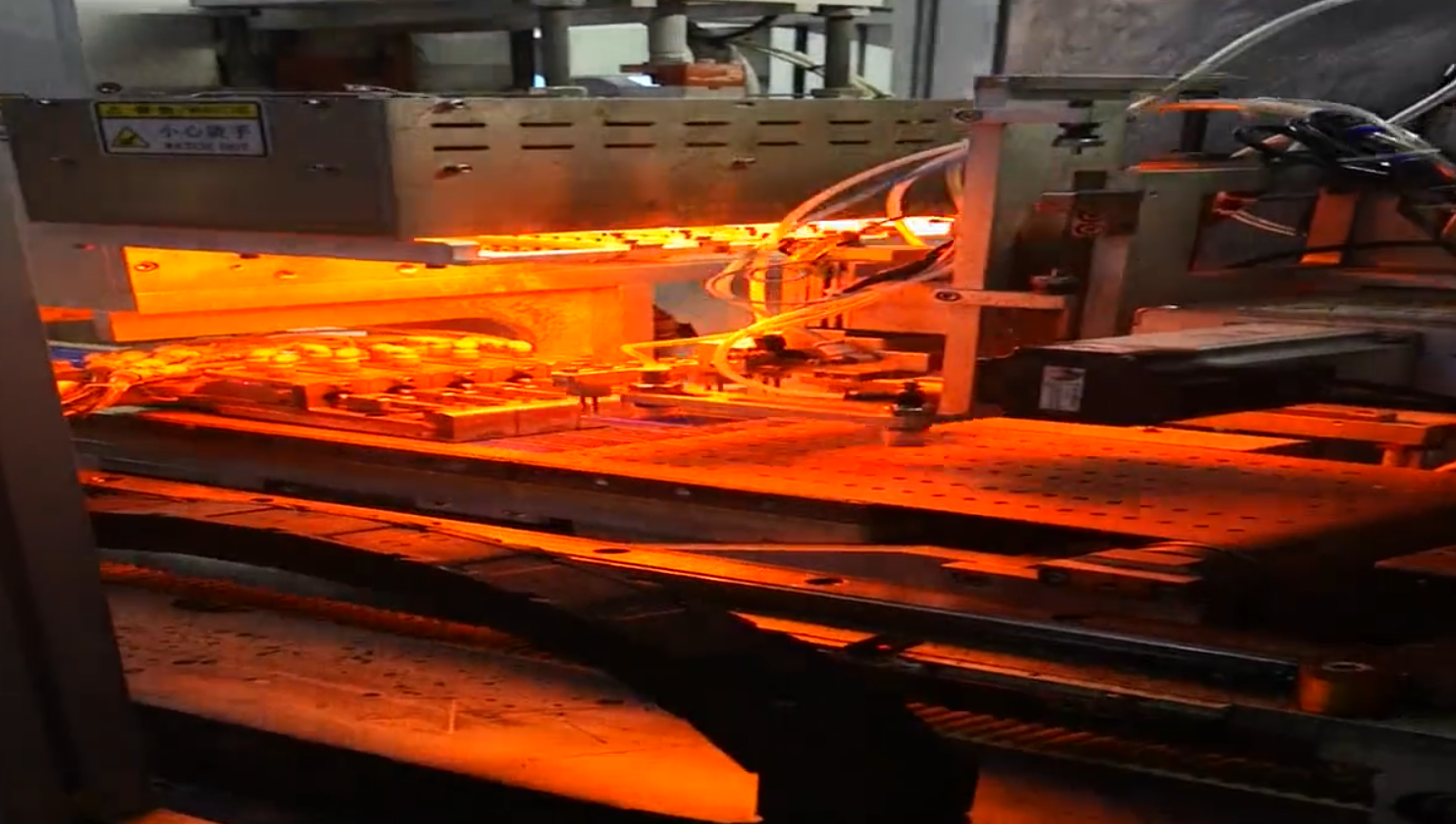
Testing if your Automotive PCBs can actually handle the heat
Let’s be honest: the inside of a car is a nightmare for electronics. Between the engine bay and the battery management systems, your PCBs are basically sitting in a furnace. To make sure a board doesn’t just give up the ghost the first time it hits a heatwave, we use digital heating stations with custom IR lamps. These aren’t your run-of-the-mill heaters. We build them to hit very specific heat targets that actually mimic what happens under the hood.
Why we use IR instead of ovens
We lean on shortwave IR emitters for a simple reason: speed. A convection oven has to heat up all the air in the room first, which takes forever. IR is different. It shoots energy directly onto the PCB surface. It’s fast. Really fast. When we’re designing these, we obsess over the wattage-per-centimeter ratio. By focusing the power, we can get the board to that target “soak” temperature without baking the entire test chamber. It keeps the surrounding chassis cool and saves us a lot of headaches.
The gear we use
Most of our builds use quartz-halogen tubes. The quartz handles the crazy heat of the filament, and the halogen cycle keeps the glass from turning dark and murky over time. We usually wire them with R7s or SK15 connectors—mostly because they stay put and don’t rattle loose when things get shaky. Here’s a little trick we use: we often coat the tubes. This shifts the emission spectrum so the heat doesn’t just sit on the surface; it actually punches through the solder mask and hits the internal copper layers. That’s where the real testing happens.
The tricky part
High-wattage IR arrays are powerful, but they’re temperamental. If the lamp is even a fraction too close to the PCB, you’ll get “hot-spotting.” Before you know it, you’ve burned right through the substrate. It’s a disaster. To stop that from happening, you need a control loop that reacts instantly. We use fast PID responses and pinpoint thermocouples to keep the board within a tight $\pm 2^\circ\text{C}$ window. It takes a bit of tweaking, but it’s the only way to get results you can actually trust.